
Poster Awards
EHPS 2025 poster award winners
On behalf of the poster judges, the Scientific Committee chairs are excited to announce the EHPS 2025 poster award winners. The poster judges were impressed by the high visual quality and methodological rigor of the posters. We congratulate all presenters on their excellent work.
From all presented posters, we identified two poster award winners per day. The prize-winning posters are:
Wednesday:
1. Indra Carey – An ethno-phenomenographical approach to understanding physical activity enjoyment and its link to mental wellbeing
2. Lyra Egan – Main Outcomes from a Cluster Randomised Controlled Trial of the OurFutures Vaping Program
Thursday:
1. Lieve Vonken – The effect of narratives on perceived antibacterial resistance susceptibility
2. Morkevičiūtė Modesta – Affective and occupational outcomes of workaholism: A systematic review and meta-analysis
Friday
1. Yara Sievers – Understanding and facilitating sun protection among outdoor workers in the Netherlands
2. Theresa Frohn – Silently ignored: how attributional styles moderate the impact of phubbing on well-being in VR interactions
We also thank the poster judges, Dr. Maya Braun, Dr. Hannah Durand, Dr. Helge Giese, Professor Laura M. König, Professor Renato Pisanti, Dr. Sanne Raghoebar for their support!
You can click on each poster title above to see the judge’s report, the submission’s abstract and the poster itself
An ethno-phenomenographical approach to understanding physical activity enjoyment and its link to mental wellbeing
Abstract:
I. Carey1, I. Prichard1, E. Kemps1
1Flinders University, Australia
Background: Physical activity enjoyment is not only vital for maintaining physical activity practice, but also improves mental wellbeing. However, there are gaps in our understanding of what makes different types of physical activities enjoyable. Therefore, qualitative research on the enjoyment of a range of physical activities should aid understanding of how physical activity can be enjoyed and maintained, ultimately contributing to improved wellbeing.
Methods: This study used an ethno-phenomenological approach. Eleven participants from different physical activities were included. The primary researcher engaged in each participant’s physical activity with them before conducting semi-structured interviews. This approach extends standard phenomenological methods by situating the researcher in each participant’s world, enhancing human-to-human relationships and the quality of interviews. A reflexive thematic analysis was conducted on the interview transcripts.
Findings: The researchers developed three themes about how individuals enjoyed their physical activities and the effects of these on their wellbeing: (1) “Operating at the right level” relates to the importance of skill, coaching, and others’ abilities, and expanded to confidence beyond physical activity; (2) “Freedom of expression” shows the importance of activity choice, both as a form of identity and community, and what maintains participation; and (3) “Active meditation” expresses how individuals engage in their activity as a form of physical meditation.
Discussion: This study sheds light on various aspects of physical activity enjoyment that individuals find important, and how these relate to their day-to-day wellbeing. Focusing on these themes may aid the development of interventions that aim to improve wellbeing through physical activity.
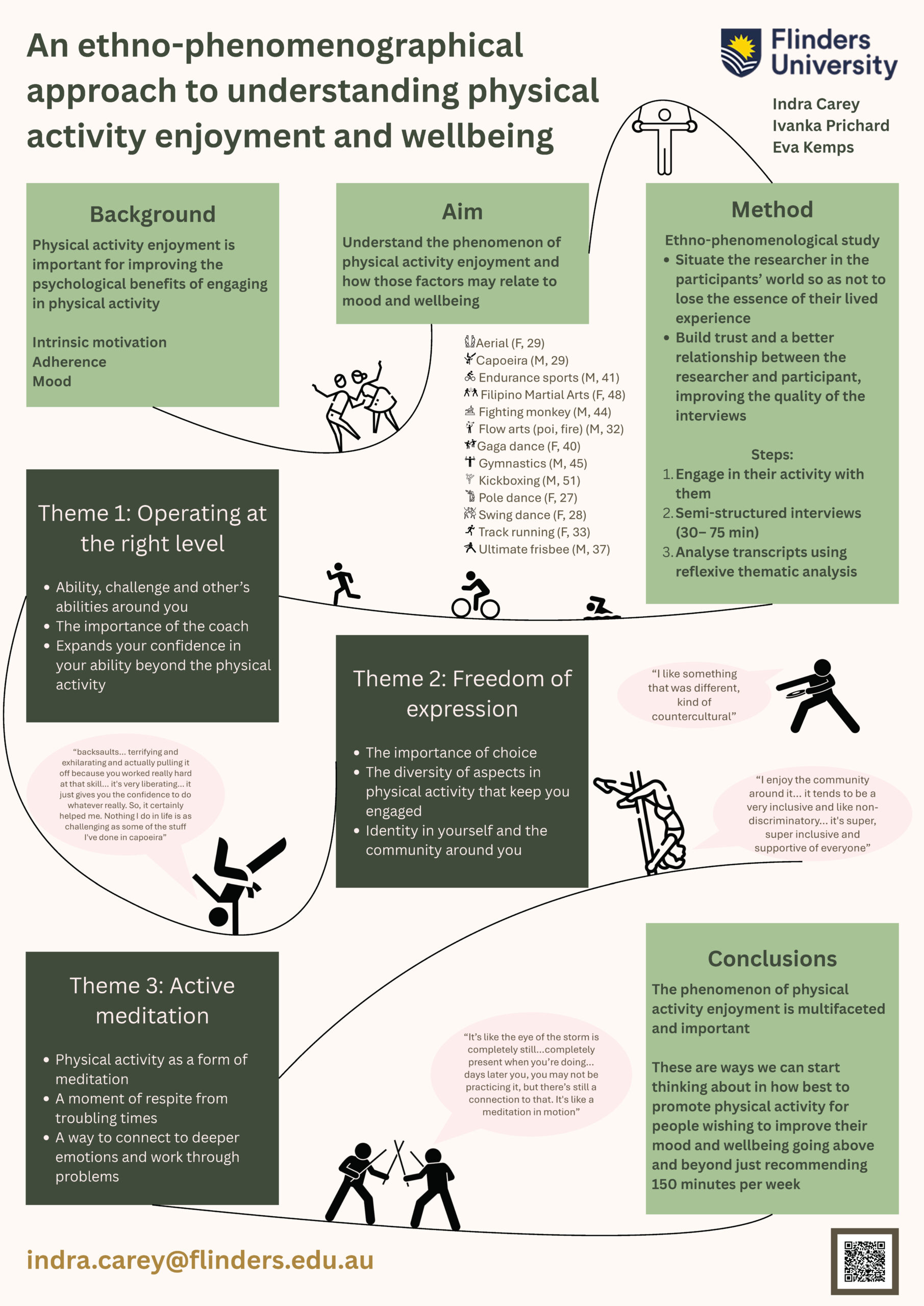
Click on the image to view the poster
The Judges’ Decision
The poster presents a highly innovative approach that is not frequently seen in health psychology research, but has clear added value. The methodology is clearly presented. The poster manages to keep the key message short and clear, while linking to further information via a QR code. Furthermore, the poster is aesthetically pleasing with graphics that are highly relevant to the topic at hand.
Main Outcomes from a Cluster Randomised Controlled Trial of the OurFutures Vaping Program
Abstarct
L. Egan1, L. Gardner1, A. Rowe1, E. Stockings1, K.E. Champion1, L. Hides2, N. McBride3, S. Allsop3, S. O’Dean1, M. Sunderland1, Y.Y. Lee4, C. Mihalopoulos3, B. Freeman1, J. Leung5, H. McRobbie6, L. Stapinksi1, N. Lee3, L. Thornton1, L. Birrell1, M. Teesson1, N.C. Newton1
2University of Queensland, Australia
3Curtin University, Australia
4Monash University, Australia
5The University of Queensland, Australia
6UNSW Sydney, Australia
Background:
E-cigarette use (‘vaping’) is prevalent among adolescents, with emerging evidence of adverse physical and mental health effects. Effective behaviour change interventions are urgently needed, and school is an ideal setting for delivery. This study evaluated the efficacy of the digital OurFutures Vaping Program; a universal school-based preventive intervention targeting e-cigarette use.
Methods:
A cluster randomised controlled trial (RCT) was conducted in 40 secondary schools across three Australian states. Schools were randomised to either receive the OurFutures Vaping Program or Year 7/8 health education as usual. The primary outcome was e-cigarette use at 12-months, measured via self-report surveys. Secondary outcomes were tobacco cigarette use, intentions to use e-cigarettes/tobacco cigarettes, knowledge about e-cigarettes/tobacco cigarettes, motives and attitudes relating to e-cigarettes, self-efficacy to resist peer pressure and refuse e-cigarettes, mental health, quality of life, and resource utilisation. Generalised mixed-effects regression analyses investigated whether the intervention reduced the likelihood of primary and secondary outcomes.
Findings:
A total of 5,157 Year 7/8 students (Mage=13.3yrs, SD=0.6; 46% female) participated. At baseline, the prevalence of lifetime e-cigarette use was 8.3%, and past 30-day use was 1.97%. Preliminary analyses reported that intervention group participants had lower odds of reporting vaping uptake at both 6-months (OR=0.48, 95%CI=0.24-0.95, p=0.035) and 12-months (OR=0.35, 95%CI=0.18-0.66, p<0.001). Full analysis findings will be presented at EHPS.
Discussion:
This is the first rigorous evaluation of a school-based digital program targeting e-cigarette use among Australian adolescents. The OurFutures Vaping Program has the potential to make a substantial health and economic impact in Australia and worldwide.
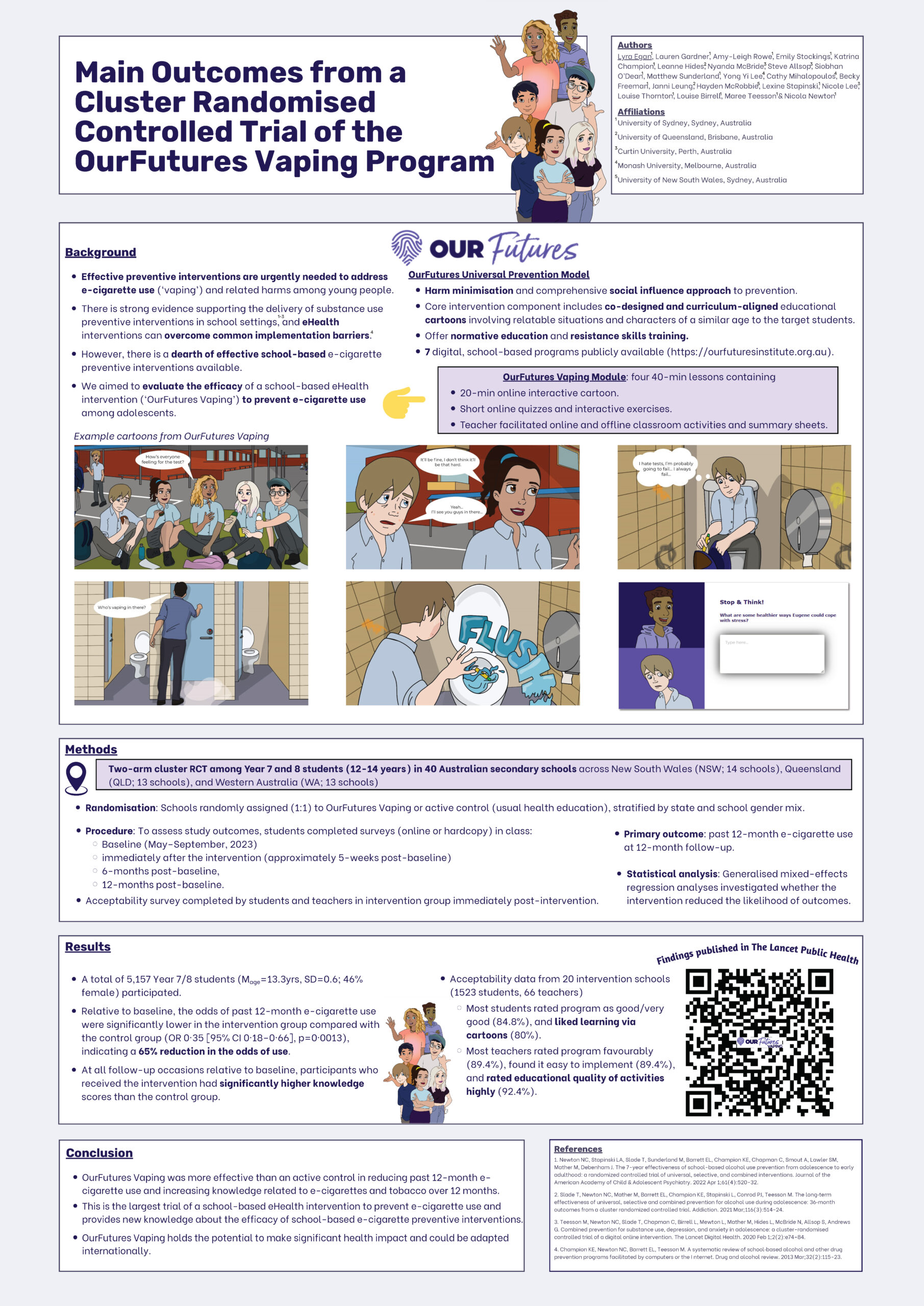
Click on the image to view the poster
The Judges’ Decision
The poster employs a clear and logical structure aligned with the submission guidelines, showcasing high readability and visual impact through a well-designed layout. The use of a cartoon to illustrate the experimental manipulation is not only visually engaging but also enhances comprehension of the study’s design. The poster presents a rigorous Randomised Controlled Trial with clearly outlined methods, including participant details, procedures, and measures, and effectively communicates key results.
The effect of narratives on perceived antibacterial resistance susceptibility: A randomized trial among medicine students
Abstract
L. Vonken1, G. de Bruijn2, M. Candel1, S. Kremers1, F. Schneider1
1Maastricht University, Care and Public Health Research Institute, Netherlands
2University of Antwerp, Belgium
Background:
Antibiotic resistance (ABR) is one of the greatest threats to global health today. Healthcare professionals are gatekeepers to antibiotics and thus play a key role in curbing ABR. Despite recognizing the seriousness of ABR, healthcare professionals often question their susceptibility to ABR. To increase perceived susceptibility, risk communication through narratives is recommended. In general, especially self-constructed narratives ensure imaginability and thus effectiveness. This study applies an experimental design to investigate the effect of pre-constructed and self-constructed narratives on perceived ABR susceptibility of medicine students, the healthcare professionals of the future.
Methods:
Participants are medicine students at Maastricht University (required n=168, based on G*power analysis), randomly allocated (ratio 1:1:1) to one of three conditions: (1) writing a risk scenario, (2) reading a pre-constructed risk scenario, or (3) reading non-narrative information (control). Baseline data (background variables and perceived susceptibility) and post-manipulation data (evaluation of the condition and perceived susceptibility) are collected. The differences in susceptibility between the three groups post-manipulation are examined in linear regression analyses, correcting for differences in baseline susceptibility and awareness. Moreover, in the experimental groups, a mediating effect of imaginability is investigated with a joint significance test. Content analysis is applied to the narratives. The study protocol was preregistered on the Open Science Framework: https://osf.io/dkty3/.
Discussion:
Data collection will be concluded in March 2025. This study will show whether narratives can effectively be applied to a complex and abstract problem like ABR.
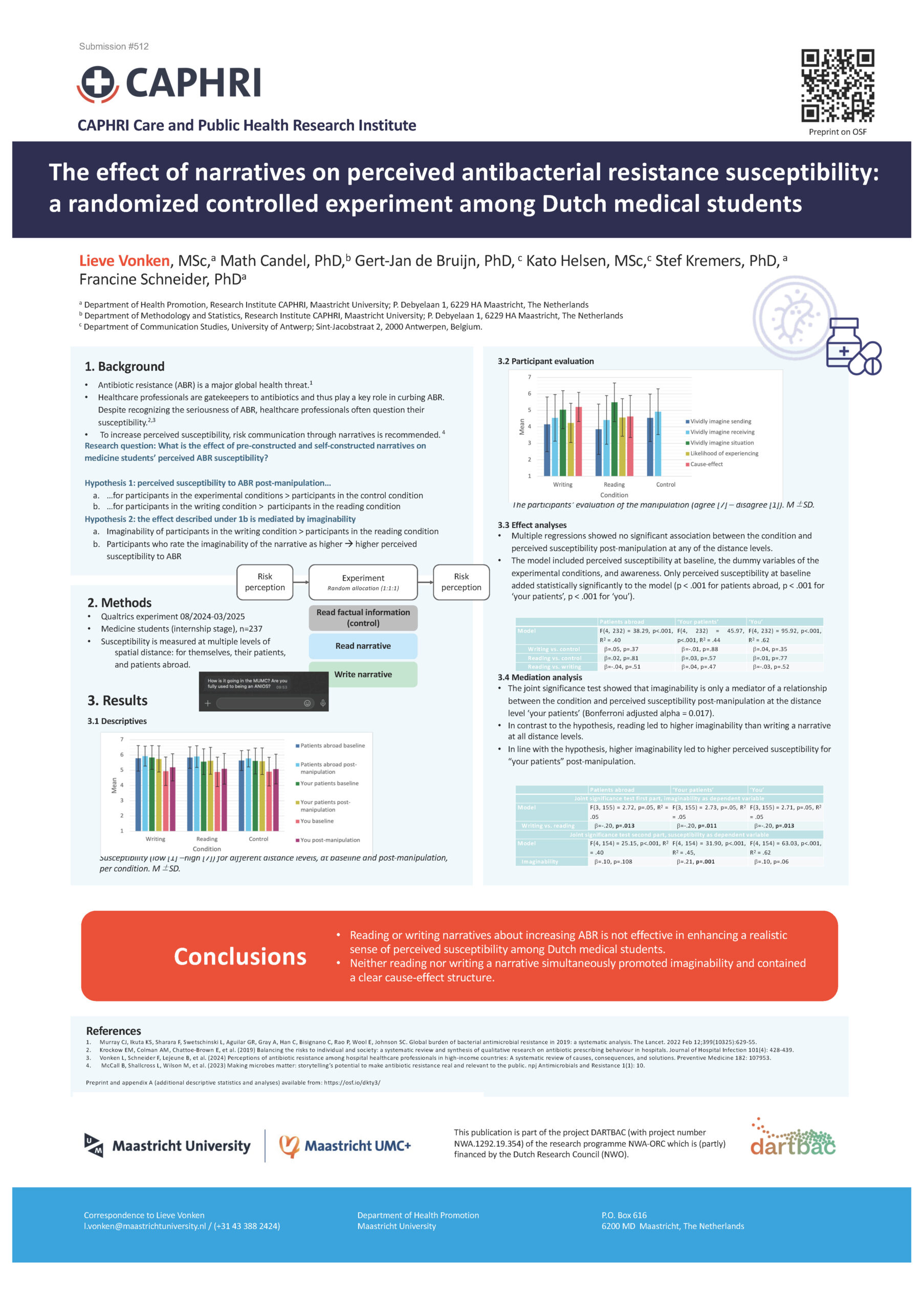
Click on the image to view the poster
The Judges’ Decision
This poster stands out for its clear structure, visually appealing design, and logical flow from background to conclusions. The introduction frames antibiotic resistance as a pressing global health issue and positions the research within a strong theoretical and practical context. The experimental methods are rigorous and transparent, with a robust sample and detailed analytic approach. Results are effectively communicated with well-labelled visuals and appropriate statistical detail. Importantly, the study addresses an innovative question—testing narrative communication to influence susceptibility perceptions—and provides valuable findings for health communication research, even where results diverge from initial hypotheses.
Affective and occupational outcomes of workaholism: A systematic review and meta-analysis
Abstarct
M. Morkevičiūtė1, I. Bučiūnienė1
1ISM University of Management and Economics, Lithuania
Background:
Although workaholism is typically viewed as a negative construct, some researchers have found that workaholics exhibit high job satisfaction (Kaygin et al., 2023) and exceptional productivity (Peiperl & Jones, 2001). This casts doubt on both affective and occupational outcomes of workaholism. Against this background, the aim of the current systematic review and meta-analysis was to summarize research findings on the affective and occupational outcomes of workaholism.
Methods:
The search was limited to references published between January 2013 and February 2025. The following databases were used to search for the papers: ISI Web of Science, Scopus, EBSCO Academic Ultimate, ScienceDirect, Taylor & Francis, Oxford Journals Collection, Wiley Online Library, SAGE Journals Online and Google Scholar. The eligibility of the papers was determined by screening their titles, abstracts and full texts.
Findings:
The search generated 4254 papers. A total of 36 references were retained for the analysis. The systematic review revealed that workaholism is related to higher levels of anxiety, depression, and stress. Meta-analytic calculations further confirmed significant positive relationships between workaholism and anxiety, depression, stress, and emotional exhaustion. Such outcomes as job satisfaction, performance and career development were not related to workaholism.
Discussion:
The findings emphasize harmful effects of workaholism, linking it to negative affective outcomes while rejecting its positive occupational impact. Theoretically, this review contributes to better understanding of workaholism as a psychological risk rather than a productivity booster. Practically, it dispels doubts related to workaholism and underscores the need for organizational interventions to reduce harmful working habits.
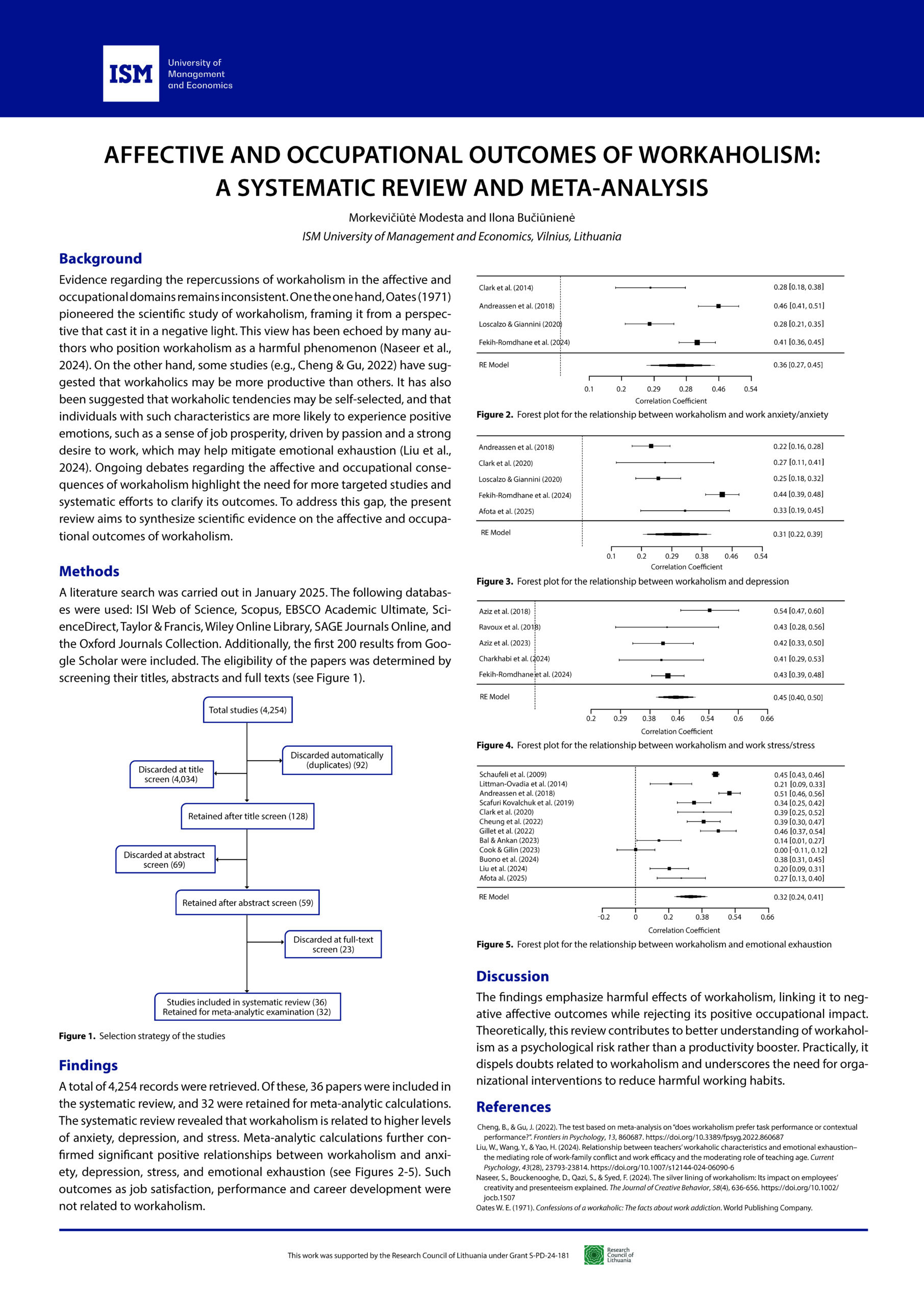
Click on the image to view the poster
The Judges’ Decision
This poster excels in visual impact, with a clean layout and effective use of PRISMA flow and forest plots to summarise complex findings. The background offers a balanced overview of debates in the field, clearly justifying the review’s aims. The methodology is comprehensive and transparent, demonstrating a robust systematic review and meta-analytic approach. Findings are clearly presented and statistically reinforced. The discussion carefully situates the results within theory and practice, offering significant implications for workplace health interventions
Understanding and facilitating sun protection among outdoor workers in the Netherlands
Abstract
Y. Sievers1, L. Van Osch1, R. Crutzen1, F. Schneider1
1Department of Health Promotion, Care and Public Health Research Institute, Maastricht University, Netherlands
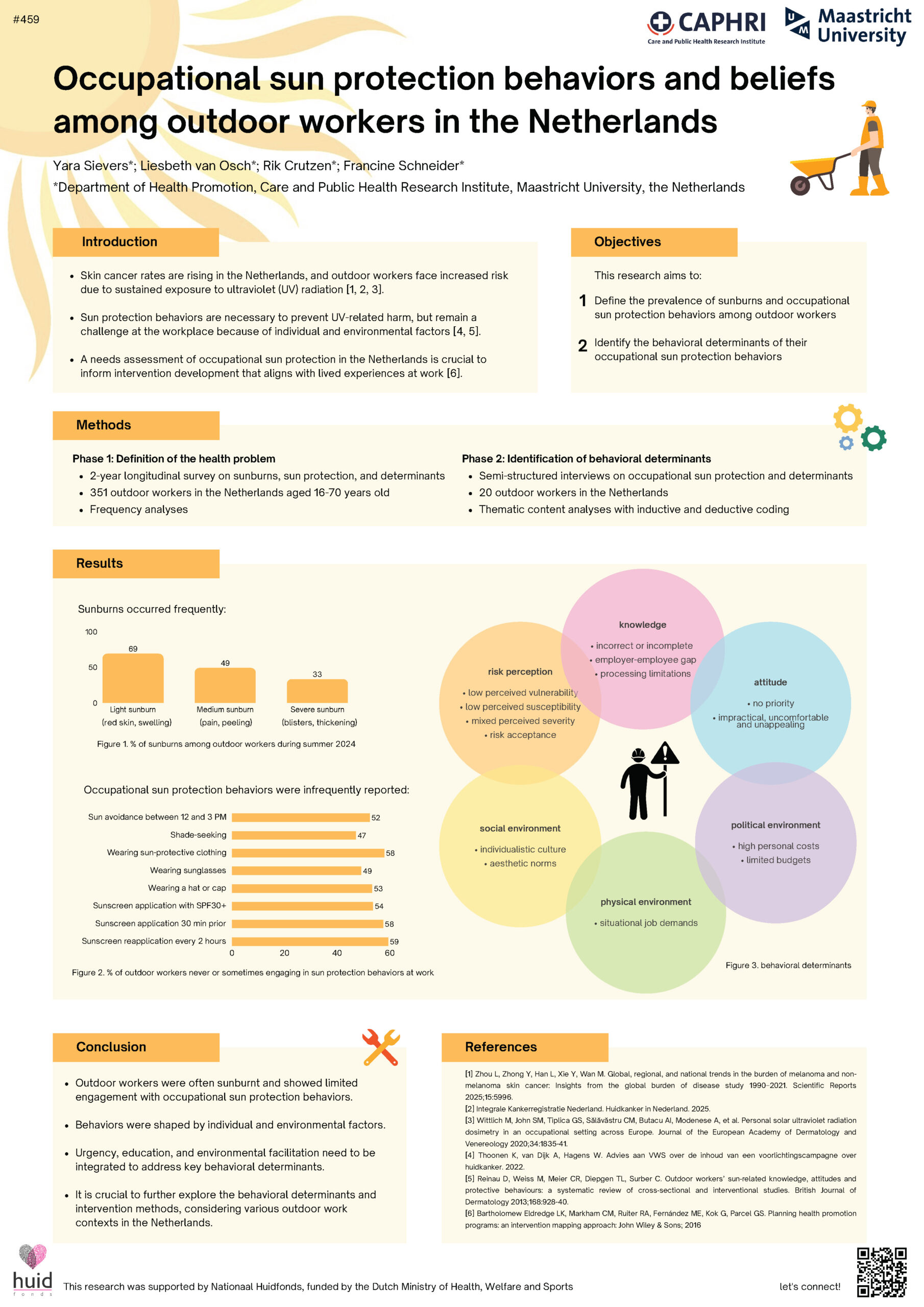
Outdoor workers experience relatively high exposure to UV radiation, increasing their risk of developing skin cancer. Current sun protection behaviours among outdoor workers in the Netherlands remain suboptimal, highlighting the need for targeted intervention strategies. This study aims to explore barriers and facilitators of adequate sun protection among outdoor workers, and identify intervention strategies to facilitate sun protection.
A total of 20 individual semi-structured interviews were conducted with employees working outdoors across various sectors in the Netherlands. The interview guide combined constructs from the Reasoned Action Approach and Protection Motivation Theory, focusing on attitudes, knowledge, subjective norms, risk perception, perceived behavioural control, and coping mechanisms. A thematic analysis was performed in Atlas.ti to generate key themes.
Participants reported engaging in sun protection behaviours, predominantly through shade-seeking and wearing protective trousers. While barriers to sun protection included low perceived susceptibility to skin cancer and sunburns, incomplete or inaccurate knowledge, low prioritisation of sun safety at work, and environmental barriers, facilitators included high perceived severity of skin cancer, perceived importance of sun safety, and facilitating environments such as availability of protection equipment. Moreover, suggested intervention strategies pertained to agenda setting, the use of change agents and narratives, and improvements in protective clothing.
The findings provide valuable insights into the behaviours and perceptions of outdoor workers. They point towards the development of an integrated approach focusing on urgency, education and environmental facilitation. Addressing both individual and organisational factors is key to facilitate sun protection among outdoor workers in the Netherlands.
Click on the image to view the poster
The Judges’ Decision
The poster is visually attractive, and the research topic is immediately clear. Its design reinforces the content, and the logical presentation flow makes it easy to navigate through the different sections. The poster addresses an important and little investigated research area on occupational sun protection in the Netherlands, using a mixed-methods approach. The results are presented in a clear and visually engaging way, and the conclusions are well described
Silently ignored: how attributional styles moderate the impact of phubbing on well-being in VR interactions
Abstract
T. Frohn1, T. Radtke1
1University of Wuppertal, Germany
Background:
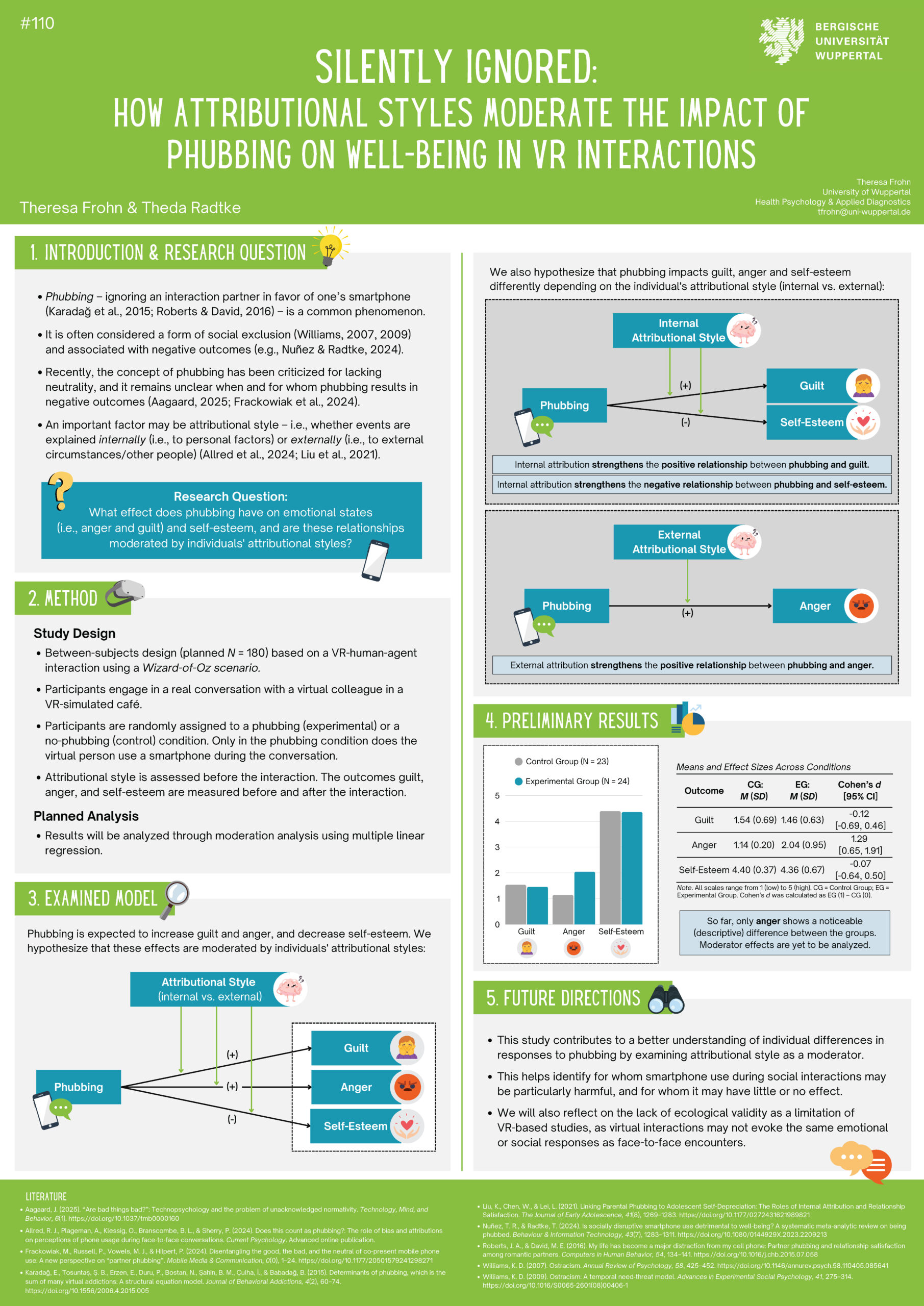
Phubbing – the temporary disregard of an interaction partner in favor of one’s smartphone – is a common phenomenon in today’s digitalized world, often linked to negative effects such as reduced mental well-being. However, the effects of phubbing are not universally negative—while some individuals experience detrimental consequences, others remain unaffected. This inconsistency highlights the need to identify for whom phubbing is particularly harmful. Building on recent findings, this study integrates the Temporal Need Threat Model of Ostracism with Attribution Theory to examine how attributional styles (internal vs. external) influence phubbing’s effect on mental well-being.
Methods:
A VR-based human-agent interaction using a Wizard-of-Oz scenario will be implemented, in which participants converse with a virtual person in a VR-café. Participants (planned N = 152) will be randomly assigned to a phubbing (experimental condition = EC) or a no-phubbing condition (control condition). In the EC, the virtual person uses a smartphone during the conversation with the participant. Before the VR interaction, attributional style is assessed, while guilt, anger, and self-esteem will be measured afterwards. Results will be analyzed with regression analyses. We are currently finalizing the virtual environment. Recruitment will begin in April.
Findings:
We hypothesize that attributional style moderates the effect of phubbing on guilt, anger and self-esteem, such that internal attribution increases guilt and reduces self-esteem, while external attribution increases anger.
Discussion:
We will discuss the practical implications of our findings for interpersonal dynamics and digital communication as well as the relevance of VR-based experimental research in studying social exclusion.
Click on the image to view the poster
The Judges’ Decision
The poster is visually appealing and follows a logical presentation flow. It addresses phubbing, a neglected but important behavior and is well grounded in theory. The research question is immediately clear, and the study applies an innovative method using VR. The model and hypotheses are clearly visualized, as well as the preliminary results.